


NEWSお知らせ&トピックス
Inheriting a Better Future through Rugby : Pankaj Singh's Journey of Leadership
掲載日:2026年10月6日
Pankaj Singh, Rugby Development Manager of Rugby Association of Maharashtra, and Co-Founder of Eleanor Foundation, he participated RUCK’ed (now Asia Youth Leadership Program), an initiative that brings together young rugby leaders from across Asia to develop the skills, confidence, and networks needed to drive change in their communities. For Pankaj, that experience became a turning point in a much longer journey.
A young boy used to deliver milk before school and pick up odd jobs just to help his family get by. His father drove an auto-rickshaw, working around the clock so that his son might have a life beyond the driver's seat. Today, that boy — Pankaj Singh — is a World Rugby-certified educator, an international match official, and the co-founder of a foundation that has already changed hundreds of children's lives. His next goal: to become the first Indian referee at the HSBC Sevens Series.
Pankaj's story is not just one of personal achievement. It is a story about what happens when someone is given the tools, the confidence, and the belief that they can lead — and then decides to pass all three on to others.
A Foundation Built on Shared Struggle
Pankaj co-founded the Eleanor Foundation with Ishwaraj Kotari, a fellow rugby administrator who grew up in Mumbai's Colaba slum and rose from that background to become a development manager within Indian rugby. The two men recognized something in each other: they had both been lifted out of difficult circumstances by the same sport, and they wanted to build a bridge for others to cross the same way.
"My family migrated from Uttar Pradesh to Mumbai, and my father is an auto driver," Pankaj explains. "It has been difficult for us to get an education. The only thing that motivated me to pursue it was sports." Through rugby, he found a path — one that let him prove himself, support his family, and eventually help others do the same.
Founded in 2023, the Elenor Foundation set out to give underprivileged children in Mumbai's slum communities access to organized sport. It was not an easy sell. For many families, a child's time was worth more spent collecting garbage or earning small wages than kicking a ball around a field. Pankaj and Ishwaraj had to build trust one family at a time, showing parents a real, visible pathway — certificates, communication skills, even government job opportunities — that rugby could open up for their children.
Money was scarce in the early days. Pankaj and Ishwaraj funded the foundation out of their own salaries and took on extra coaching sessions just to keep programs running. Slowly, it worked. Today, the foundation runs sessions three times a week across multiple locations and has achieved something remarkable for grassroots sport in India: 50 percent female participation, built on a simple but deliberate rule for its beach rugby tournaments — every team must include at least two women.
RUCK’ed The Program That Changed Everything
In January of last year, Pankaj joined the RUCKI’ed (Asia Youth Leadership Program) as a participant — and by his own account, walked in as a different person than the one who walked out.
"If you go back and look at the recording of that first session," he says, "and then look at me now, you'll see a drastic change. I don't fear being wrong anymore. I don't fear that I won't be able to talk."
He remembers being stumbled and shy on that very first Zoom call, unsure how to explain himself. It was a facilitator's simple encouragement — that the space was open, that mistakes were part of learning — that began to shift something in him. Session by session, he grew more willing to speak up, to disagree, to ask questions he might once have swallowed.
One lesson in particular stayed with him: the difference between having the right answer and actually leading. "I was very eager to be a leader. I wanted to solve the problem, but I wasn't taking everyone's point of view into consideration," he reflects. "You have to be considerate. You have to understand everyone, and then put forward your point — not walk alone like a leader making people into followers. I don't want to be someone who leads from the front alone, but together."
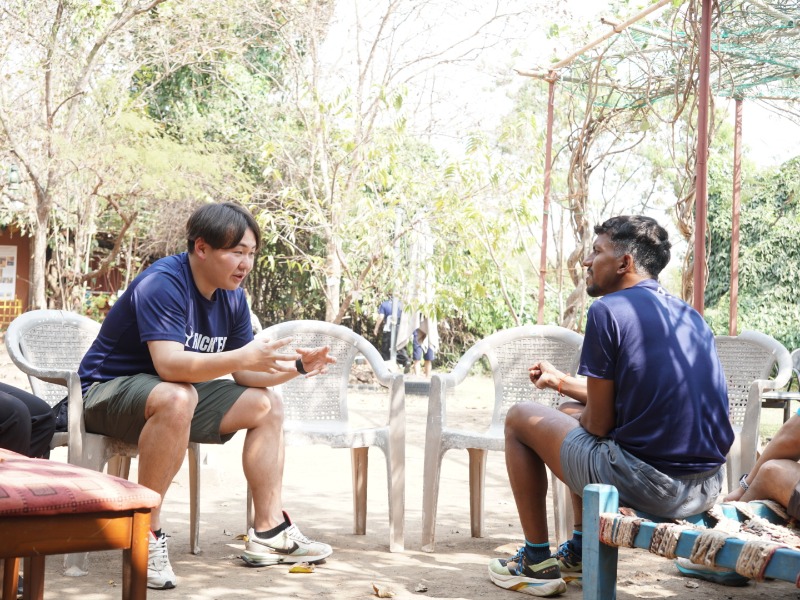
It is a lesson that now sits at the center of how he runs his programs.
Building the Pathway, One Age Group at a Time
After RUCK’ed, he was selected as one of participants who visited Japan to learn about Japanese Rugby Development.
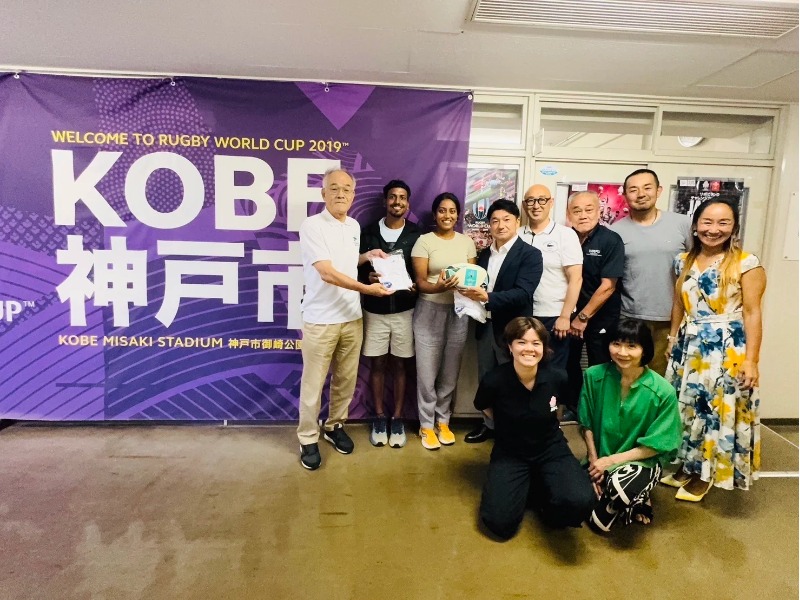
After he saw the Japanese Rugby Pathway system, he has been working on building the playing pathway in India, too. This year, Maharashtra Rugby rolled out what is very first for rugby in India: a fully continuous player pathway, from Under-8 touch rugby all the way through Under-21 and into senior contact rugby. "We're trying to get the gaps filled, the transitions better, and the sustainability built in," he says. "If you start at eight, you have a pathway all the way to twenty-five, twenty-six."
Alongside it, he has launched a new initiative called Fun with Rugby at the Eleanor Foundation, aimed at children aged 8 to 14, built on a simple invitation: you don't need to know the game, you just need to want to have fun. It is, in many ways, the foundation's founding idea in miniature — lower the barrier to entry, and let the sport do the rest.
He is also working to build something less visible but just as important: a team that can run these programs without him. "I'm trying to create an organization where I have five or ten people who work, and I can sit back and manage what's happening — not carry it all myself." His long-term goal is to expand the Eleanor Foundation to Uttar Pradesh, the state his family migrated from, within the next two to three years.
Still Chasing the Next Dream
Professionally, Pankaj has moved from player to match official to educator — while pursuing a goal he set for himself a decade ago: to become the first Indian referee on the HSBC Sevens Series. He recently reached a milestone toward that dream, nominated to the Asia Rugby Emirates Referees Panels 2026.
Asked what he would tell future participants, Pankaj doesn't hesitate: "Sky's the limit. Never stop. Never stop dreaming, never stop working, never stop to show yourself how confident you can be — because in the end, what matters is that you show up, rather than stepping back and thinking someone else will do it."
To be a leader building pathways for hundreds of children across Maharashtra — Pankaj Singh's journey is a reminder of what becomes possible when someone is finally given the room, and the confidence, to lead.